Selling an Older Easton Home? Understand PA Disclosure Law
July 9, 2026
July 9, 2026
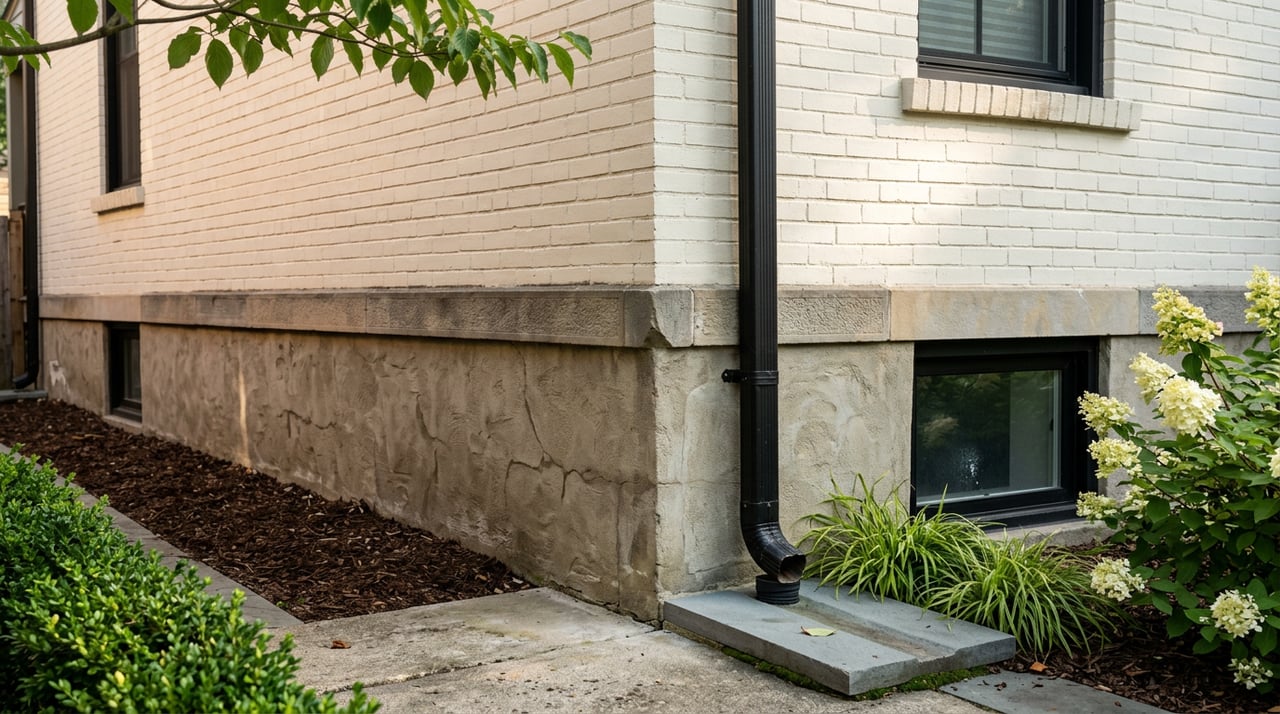
Picture the kitchen table in a South Side twin, a College Hill Colonial, or a West Ward row house. The listing agreement is signed, coffee is going cold, and the Seller's Property Disclosure Statement is sitting between you and a pen. Nine pages of yes, no, and unknown. Most sellers focus on the roof line and the water heater line, answer those carefully, and glide through everything else.
That is where Easton deals get complicated. The questions most likely to slow down a sale here are not the ones about mechanical systems. They are the questions the state form asks about walls you share with a neighbor, the ground under your basement slab, and the tank someone abandoned in the yard in 1968. A Superior Court decision from November 2025 tightened what the law counts as a "material defect," which means the seller's real exposure has shifted from disclosing feelings about a property to documenting physical facts about it. In an older Easton house, physical facts pile up.
Pennsylvania's Real Estate Seller Disclosure Law applies to almost every transfer of a home with one to four dwelling units, and the state-approved form has to be delivered to the buyer before the agreement of sale is signed. The statutory form language is dense, but four sections do most of the work in this market.
Shared or common areas. The form asks directly whether you are aware of any shared driveways, party walls, retaining walls, bridges, or maintenance agreements. In an Easton row house or twin, the honest answer is almost always yes, and the follow-up question is whether an agreement is in writing. A verbal understanding with the neighbor about who fixes the parapet, who pays for a leaning garden wall, or how the shared drive gets plowed is exactly the kind of thing a buyer's attorney will flag. Getting it down on paper before listing removes a common cause of last-minute renegotiation.
Sinkholes and subsidence. The form asks whether you are aware of any sinkholes that have developed on the property. Sinkholes are not a fringe question in this region. The Pennsylvania Department of Conservation and Natural Resources describes karst as a defining feature of the state's landscape, and the Lehigh Valley's carbonate bedrock underlies most of the urban core. The city itself sets the expectation for how homeowners handle a suspected sinkhole. Per the City of Easton's public works FAQ, sinkholes on private property are the property owner's responsibility to repair, but residents should notify Public Works at 610-250-6680 so the department can inspect for utility or underground problems. If you ever made that call, the record of it belongs on the disclosure form.
Underground tanks and legacy hazards. The form asks about underground tanks and hazardous substances, listing asbestos, PCBs, radon, lead paint, and urea-formaldehyde foam insulation by name. In Easton's pre-1978 housing stock, at least one of those items is usually in play. Lead paint disclosure is federal law on top of state law. Radon results from a prior transaction, an abandoned oil tank in the side yard, or vermiculite insulation in an attic are all knowledge you carry into the sale, and knowledge you carry is knowledge you disclose.
Water in the basement. The state form asks not only whether you are aware of water leakage, accumulation, or dampness, but also whether you know of any repairs or attempts to control the problem. A sump pump installed by the previous owner is an "attempt to control." A French drain along the north wall is an "attempt to control." The section is worded to capture the history, not just the current condition.
The Pennsylvania Superior Court decided Wentworth v. Steinmetz on November 12, 2025. Buyers had discovered hate symbols tiled into the basement floor of a home after closing, argued the seller should have disclosed the tiling, and asked for roughly $30,000 to replace the floor. The court ruled against them, following the state Supreme Court's earlier holding in Milliken v. Jacono that purely psychological stigmas are not material defects a seller must disclose. As the Wyomissing firm Kozloff Stoudt summarized, Pennsylvania sellers are required to disclose known material defects, meaning problems with a significant adverse impact on value or an unreasonable risk to people on the land. The Wentworth court reinforced that the defect has to be objectively physical and quantifiable.
For Easton sellers, the takeaway is not "you can disclose less." It is that the surface area for a valid claim has narrowed to the physical and the measurable, which is precisely the surface area an older home generates the most of. A buyer cannot successfully sue over a feeling about the property after closing. A buyer can absolutely sue over a known basement seepage problem the seller left off the form. As the Allentown firm Fitzpatrick Lentz & Bubba has explained, the law identifies seventeen key subject areas, and a seller cannot make representations that they know or have reason to know are false. The Wentworth ruling clarifies the ceiling of what counts. It does not lower the floor of what sellers actually experience with older homes.
The disclosure form is not a document you sign and forget. Under the Real Estate Seller Disclosure Law, a buyer generally has up to two years after settlement to bring a claim for a known defect that was not disclosed. Sellers who genuinely did not know about an issue have some protection. Sellers who knew, and who cannot produce a record showing what they knew and when, do not.
That is the practical reason to build a documentation folder before the listing photos are even taken. In an Easton home, the folder is usually thicker than sellers expect.
The state form also lets you attach explanations. Use them. A "yes" with a paragraph of context and a paid invoice is a stronger disclosure than a "no" that a buyer's inspector will contradict two weeks later.
I inherited the property and never lived there. Do I still fill out the form? Transfers by a fiduciary during the administration of an estate are exempt from the disclosure law. Once title passes to the heirs, that exemption ends, and the heirs are held to the same disclosure duty as any other seller, per the Pennsylvania Association of Realtors' recent guidance. Disclose what you know, and note clearly on the form the limits of your knowledge.
The house is being sold as-is. Do I still need the disclosure? Yes. The Pennsylvania Association of Realtors is direct on this point: an as-is sale does not remove the seller's duty to disclose known material defects. As-is describes the condition being sold. It does not describe what a seller is allowed to conceal.
It is a mixed-use building with a storefront and two apartments. Does the law apply? If the property contains between one and four residential dwelling units, the disclosure statement is required, even when the transaction uses a commercial agreement of sale. A ground-floor retail space with residential units above is a common Easton configuration, and it still triggers the form.
Do I need to bring in an engineer before listing? The statute is explicit that sellers are not required to hire experts or investigate unknown conditions. You disclose what you know. If you have never noticed a problem and none of your documentation suggests one, the honest answer is the honest answer. What you cannot do is answer "no" to a question you already know is a "yes."
Selling an older home in this city rewards preparation and punishes improvisation. The disclosure form is the point in the transaction where every small piece of history you have collected as a homeowner becomes either an asset or a liability, depending on whether it is written down. If you are thinking about listing this year and want a calm walkthrough of the form before it lands in front of you, Jamie Elstner at Morganelli Properties works with Easton sellers on exactly that kind of preparation. Let's Connect.
Stay up to date on the latest real estate trends.
When you work with Jamie, you gain a knowledgeable advocate dedicated to protecting your interests, simplifying the process, and helping you achieve your real estate goals.