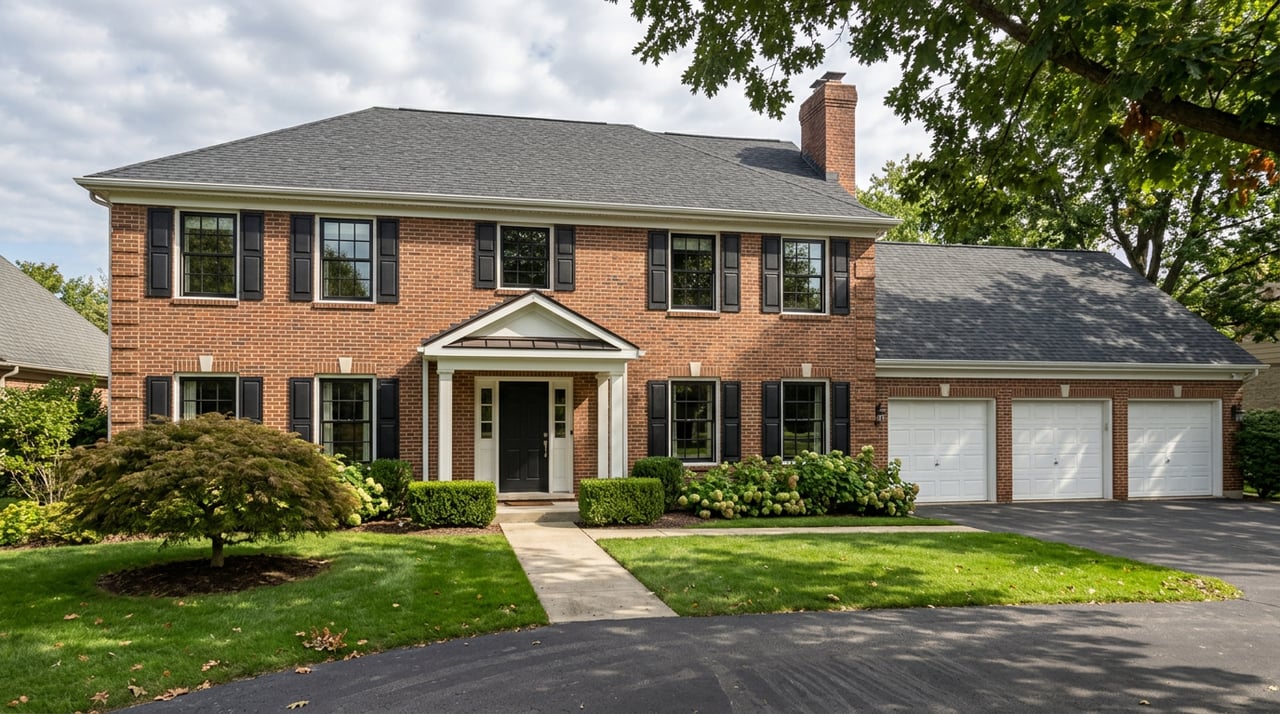
Center Valley PA New Construction Warranty Guide
September 3, 2026
September 3, 2026
What does a new-construction warranty actually guarantee you in Pennsylvania?
If you've toured a model home at The Estates at Saucon Valley or watched a frame go up along Weyhill, you've probably assumed the answer is straightforward: new house, new warranty, standard stuff. It isn't. Lundy, Beldecos & Milby, P.C. explains that Pennsylvania has no law that requires a builder to provide an express warranty for a new home. The express warranty protection you get is whatever your specific contract says, negotiated line by line, and the standard form most Pennsylvania agents start from opens by disclaiming almost everything unless someone adds it back in.
That gap between what buyers assume and what the paperwork actually says is where problems in Center Valley and Upper Saucon show up two or three years after closing, usually right when a homeowner needs the warranty and discovers it was never as broad as they thought.
In New Jersey, new-home warranties are a matter of statute. State law spells out what a builder must cover: systems, workmanship, and materials for the first year, mechanical and structural issues through year two, and major structural defects out to year ten. A buyer there doesn't have to negotiate for that floor. It exists whether the contract mentions it or not.
Pennsylvania took a different path. There is no equivalent statute here. Whatever express warranty protection a new-home buyer gets comes entirely from the agreement of sale and whatever warranty document is attached to it. If a builder in Upper Saucon Township goes out of business or a structural issue surfaces in year six, a buyer's express warranty remedy depends on what was written down at signing.
That distinction matters because most buyers moving into Center Valley's new-construction communities are transplants from states that do regulate this, or they're simply assuming "new home" comes with baked-in legal protection the way a car does. It doesn't work that way here.
The Pennsylvania Association of Realtors publishes the standard contract most agents use for new-construction sales, the Standard Agreement for the Sale of New Construction. The version currently in circulation opens with pre-printed language that disclaims every implied warranty, habitability, workmanlike construction, condition, quality, all of it, unless a separate warranty document is attached and referenced. In practice, that means a buyer who signs the form as written and never asks for anything more has agreed to buy the home without an express warranty attached, beyond whatever the builder chooses to volunteer.
The form's warranty language makes it important to review any attached warranty and discuss requested changes before signing.
Here's the part that keeps this from being alarming rather than merely important: most of the production builders active in Center Valley and Upper Saucon do voluntarily attach real coverage, they just structure it differently, and the details are worth reading rather than assuming.
Tuskes Homes, building at The Estates at Saucon Valley and The Epernay, has warranty information buyers should review directly.
That's the industry's common shape, often called the 1-2-10 model, Garman Builders explains, even though nothing in Pennsylvania law requires it:
| Coverage tier | Typical duration | What it covers |
|---|---|---|
| Workmanship | 1 year | Installation defects in drywall, paint, trim, doors, cabinets, windows |
| Systems | 2 years | Plumbing, electrical, and HVAC mechanical failures |
| Structural | Up to 10 years | Major load-bearing defects, not cosmetic issues or routine wear |
Ryan Homes and Lennar, both active in Upper Saucon Township including Lennar's Brookside Court community, and Toll Brothers, delivering homes around the Weyhill area, are among the builders whose specific warranty documents buyers should review. The point isn't that any of these builders are doing something wrong. It's that "the warranty" isn't one universal thing you can assume. It's a specific document with specific durations, and the only way to know what you actually have is to read the document itself rather than the general reputation of the builder.
Center Valley's market isn't only production communities. Estate-style lots around Weyhill Woods and similar enclaves, some running from half an acre to over two acres under Upper Saucon's R-1 zoning, are often built by custom shops rather than national builders. Myron Haydt, recognized as a top Pennsylvania custom home builder, and Monogram Custom Homes both take on private lots and smaller subdivisions in this part of the valley.
Custom builds don't come with a standardized warranty program the way a production community does. Coverage terms are whatever gets negotiated between the buyer and that specific builder, which means the PAR form's blank-slate starting point matters even more on a custom lot than it does in a Tuskes or Toll Brothers community. If a structural warranty matters to you on a custom build, that's a conversation to have and document before signing, not an assumption to carry in.
Even when a builder's warranty is generous on paper, workmanship coverage eventually expires. The practical mistake buyers make isn't signing a bad contract. It's forgetting to use the good one.
Most buyers spend the first several months unpacking and adjusting. By month ten or eleven, the settling cracks, the door that doesn't latch quite right, the trim gap that opened up over a first winter, those items have usually been mentally filed under "get to it eventually." Then the one-year workmanship window closes and they're gone.
Whether or not your builder asks for it in writing, walking the house room by room around month eleven, photographing anything that looks off, and submitting it before the anniversary date is the single most useful habit a new-construction buyer in this market can adopt.
A few things worth doing before the ink is dry on a new-construction agreement in Center Valley or Upper Saucon:
None of this requires assuming the worst about any builder working in this market. It requires reading what you're actually signing instead of what you assume a "new home warranty" automatically includes.
Does Pennsylvania require any warranty at all on new construction? No. Unlike states such as New Jersey, Pennsylvania has no statute mandating warranty coverage for newly built homes. Whatever express warranty protection exists comes from the contract and any warranty document attached to it.
Is the 1-2-10 structure required by law? No. It's an industry convention, not a legal requirement. Builders can offer more, less, or nothing, which is why the specific document attached to your contract is what governs, not the general reputation of the model.
How long do I have to report workmanship issues? The deadline is set by your specific warranty document. Walking the home and documenting issues before that window closes, rather than after, is what actually protects you.
Reading a new-construction contract closely, especially the warranty attachment, is one of the places where having someone who works this market regularly pays off. If you're weighing a production community in Upper Saucon against a custom lot near Weyhill, or you're already under contract and want a second set of eyes on what's actually being promised, Jamie Elstner can walk through it with you before you sign. Let's Connect.
This article is general information, not legal, tax or financial advice. Consult a qualified professional about your situation.
Stay up to date on the latest real estate trends.
When you work with Jamie, you gain a knowledgeable advocate dedicated to protecting your interests, simplifying the process, and helping you achieve your real estate goals.