Why Easton's Median Home Prices Vary by Neighborhood
September 10, 2026
September 10, 2026
Pull up three different sources for "the median home price in Easton" this year and you will get three different numbers, and none of them agree. Redfin's citywide read for March 2026 put the median sale price at $252,000, down 13 percent from a year earlier. Houzeo's April 2026 snapshot showed a median of $374,900, up 11 percent over the same stretch. By July, Movoto had Easton listings carrying a median asking price of $464,000. Same city, same summer, three numbers that don't triangulate to anything.
That spread isn't a data error. It's the clearest signal available that Easton stopped being one housing market some time ago and is now several small ones trading under a single city name.
Look closer at that Redfin figure and the story sharpens. In the same March 2026 window where the median sale price fell to $252,000, the average sale price climbed to $295,000, up 18 percent year over year. A falling median next to a rising average in the same three-month window is a specific kind of signal: it means cheaper homes made up a bigger share of what closed, while a smaller number of expensive sales pulled the average upward anyway. The middle of the market is thinning out. Buyers aren't settling into one typical Easton transaction anymore. They're sorting into distinct price tiers that barely touch.
Houzeo's numbers back this up from a different angle. As of April 2026, Easton had just 104 homes on the market, down almost 12 percent year over year, with only 0.97 months of supply. More than half of homes, 53 percent, sold above asking price. That's a market where whatever inventory exists gets fought over immediately, which means the closings that do happen are unusually sensitive to which few houses happened to list that month. A handful of expensive rowhome conversions or a cluster of starter twins can swing a citywide median more than it should in a market this thin.
Once you break Easton into its actual submarkets, the citywide confusion resolves into something closer to a map.
| Recent median | Window | What's driving it | |
|---|---|---|---|
| Central Easton | $240,000 | 3 months ending August 2026, up 20% YoY | Older, smaller housing stock closest to downtown's core |
| West Ward | $266,000 | 3 months ending June 2026, up 34.3% YoY | Rowhomes and twins along the Northampton Street corridor |
| College Hill | $469,142 | May 2026, up 23.4% YoY | Detached Victorians and stone homes near Lafayette College |
| Downtown / Historic District | $593,000-$666,000 | Nov 2025 and most recent month tracked | Renovated historic rowhomes, very few sales per month |
Central Easton, despite the name, is currently the most affordable close-in pocket in the city, running at $146 per square foot with a median around $240,000. West Ward is the fastest-appreciating submarket in the data, up 34.3 percent year over year through June 2026 on 29 sales that month alone, still built almost entirely around rowhomes and semi-detached twins with Colonial Revival details, packed along a Northampton Street strip anchored by Plants + Coffee, Noto's Deli, Daddy's Place, and Porters' Pub. The neighborhood also runs its own seasonal West Ward Market from May through September, which tells you something about the kind of buyer this pocket is starting to attract even as prices climb.
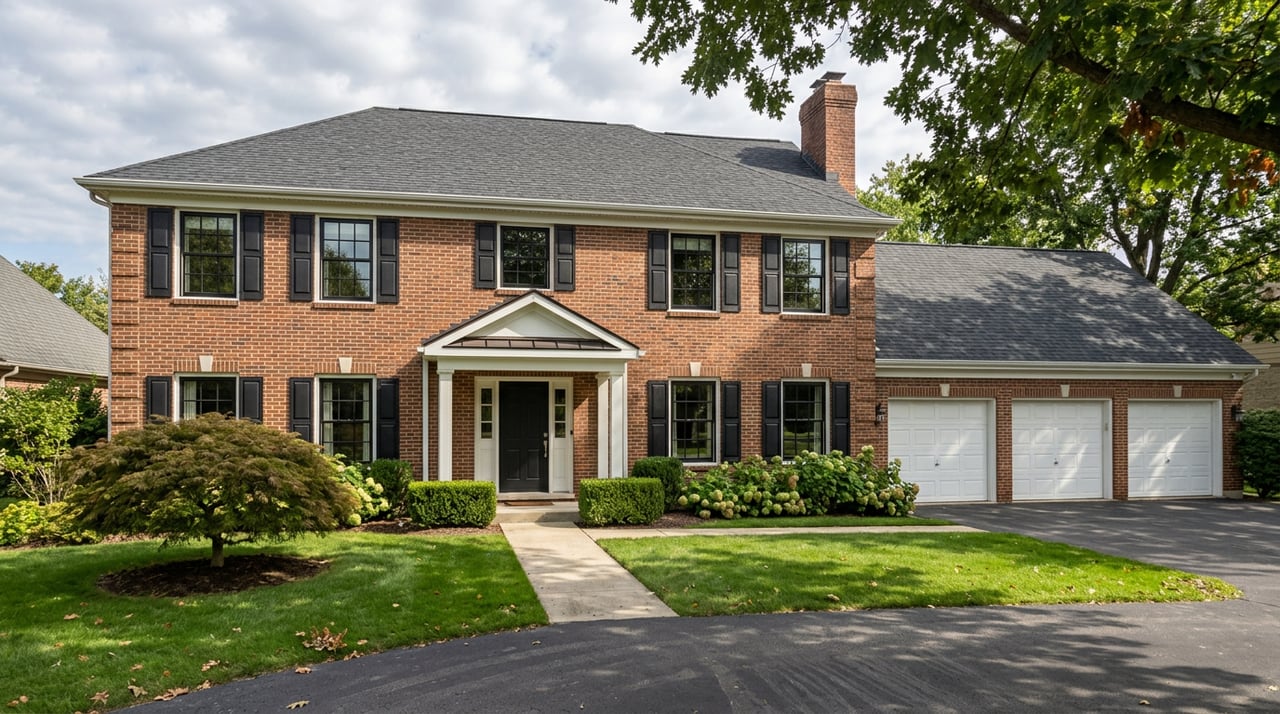
College Hill sits in an entirely different housing category. This is where Easton's detached Victorian and stone architecture concentrates, on tree-lined streets that climb above downtown toward Lafayette College's campus. The Karl Stirner Arts Trail and Nevin Park sit inside the neighborhood, Cattell Street carries most of the local dining scene with spots like Giacomo's, College Hill Tavern, and Milo's Place, and the neighborhood hosts its own Porchfest along with the annual Lehigh-Lafayette Rivalry game. None of that shows up in a citywide median, but it's a large part of why College Hill trades at nearly double Central Easton's price for a very different kind of house.
Downtown Easton and the Downtown Easton Historic District are where the numbers get genuinely unstable, and the reason is worth understanding before you lean on either figure. As of last November, the Historic District's median sale price sat at $593,000, up 42.8 percent year over year, built on just 12 closings that month. A separate, more recent read of the broader Downtown pocket showed a median of $666,000 in the most recent month tracked.
Twelve sales is not a market, it's a small sample that behaves like one. When a district only produces a dozen closings in a given month, a single renovated rowhome conversion selling for seven figures can drag the median up by tens of thousands of dollars on its own. Compare that to West Ward's 29 sales in a single month, a large enough pool that one unusual closing barely moves the needle. That's the mechanical reason Downtown's year-over-year swings look so dramatic next to the rest of the city. It isn't that downtown values are wildly volatile in reality. It's that there aren't enough transactions in any given month to smooth the number into something stable.
One development helps explain why the pull toward this corridor keeps intensifying. The Simon Silk Mill, a 19th-century industrial complex along Bushkill Creek between College Hill and downtown, has been converted through adaptive reuse into a mixed residential and commercial complex now holding 170 apartments and more than 30 businesses. Its old smokestack is visible from the Karl Stirner Arts Trail, which runs along the property. The tenant roster reads like a small downtown in itself: Owowcow Creamery, Easton Wine Project, Spectracolor Coffee Roasters, Thrive cafe, the Tipsy Crow cocktail bar, the Raven 96 breakfast spot, Seven Sirens Brewing Company's Blendery, and in 2025 Ranch City Brewing announced plans to join the lineup as well.
What matters for a buyer isn't the brewery list itself. It's that the Silk Mill added a walkable amenity node without adding a single detached house. Everything it created is apartments and commercial space, sitting exactly on the seam between College Hill and downtown. That raises the appeal of walking or biking distance from the mill without doing anything to loosen the supply of actual houses in College Hill or the historic district, which is a straightforward way to keep upward pressure on both without a single new for-sale listing appearing.
If you're using a citywide Easton number to compare against another Lehigh Valley town, you're comparing an average of at least four different housing products: rowhomes in Central Easton and West Ward, detached Victorians on College Hill, and small-sample historic conversions downtown. That number will tell you almost nothing about what a specific street will cost you.
The more useful question isn't "what's the Easton median." It's "what closed on this block, or the three blocks like it, in the last 90 days." Price per square foot travels better across housing types than a raw sale price does, since it at least partially controls for the difference between a 1,200-square-foot twin and a 3,000-square-foot Victorian. And any median built on fewer than 20 closings, which describes both the Historic District and most months in Downtown proper, should be read as a range, not a fixed number.
Easton's overall pace still favors sellers, with tight inventory and quick closings across most of the city. But which Easton you're actually buying into depends entirely on which of these four pockets you're standing in, and no single headline figure is going to tell you that.
If you're weighing College Hill against West Ward, or trying to figure out what a specific downtown block is really trading for right now, Jamie Elstner can pull the closed comparables for that exact street and walk you through what they mean. Let's Connect.
Stay up to date on the latest real estate trends.
When you work with Jamie, you gain a knowledgeable advocate dedicated to protecting your interests, simplifying the process, and helping you achieve your real estate goals.